
[jwplayer api_key="kbBMBJTjKc9WLL2/3VpmkSznwdzzqjAKHc08xw==" file="https://d900066ubkwab.cloudfront.net/Webinar216_Motion_02.mp4?Expires=1786682676&Key-Pair-Id=APKAIKDB332HYGG7URHA&Signature=Zo9gpWEnmmQohXzi5vyI0yWXi-BnBIhAfGfuhe6T5yrwh5zTe0D-dpDf4wnc6ARZvLGI2SxXYHwZhh~Fiq~Y84mTHQg8gl-WBhVCKciNY~51hnbzHd2L5AO2CrlEDux5~CgL2Yc7GM~PJcHvnmxGQb~nmQNXI7-u50RsRHMuFZA_" tracks='{ "file": "https://dev.larryjordan.com/videos_subtitle/", "label": "English", "kind": "captions", "default": true }' height="360" width="640" controls="true" playbackratecontrols="true"]
Presented: Mar. 8, 2017
COURSE DESCRIPTION
(This is the second part in a 5-part series examining Apple Motion 5.3.x.
Here’s the link to Part 1.)
Whether you use Apple Final Cut Pro X, Adobe Premiere Pro CC, or any other video editing software, you can create high-quality motion graphics using Apple Motion. Last week, we began a five-part series on the latest version of Apple Motion – v.5.3. This week, we build on that foundation and head deeper into the application.
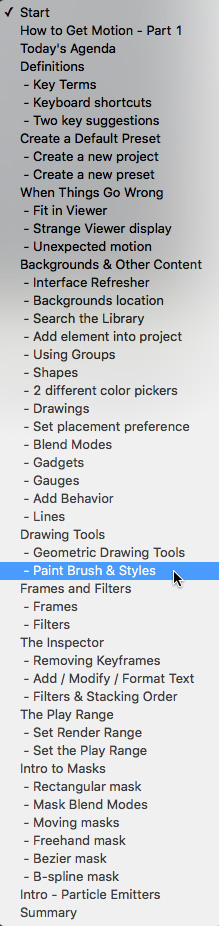
Whether you are new to Motion, or just want help figuring out where everything moved, this session is for you. This session covers:
AUDIENCE LEVEL
This is a beginning-level session, designed to introduce Motion to Final Cut Pro X and other video editors. You don’t need to own Motion to watch this training, but it is strongly encouraged that you watch Part 1 of this series before watching this movie.
SPECIAL FEATURE
To help you quickly find the information you need, we included chapter markers in the download version for easy navigation. Click here to learn how to display them in your download.
CONTENT OUTLINE


